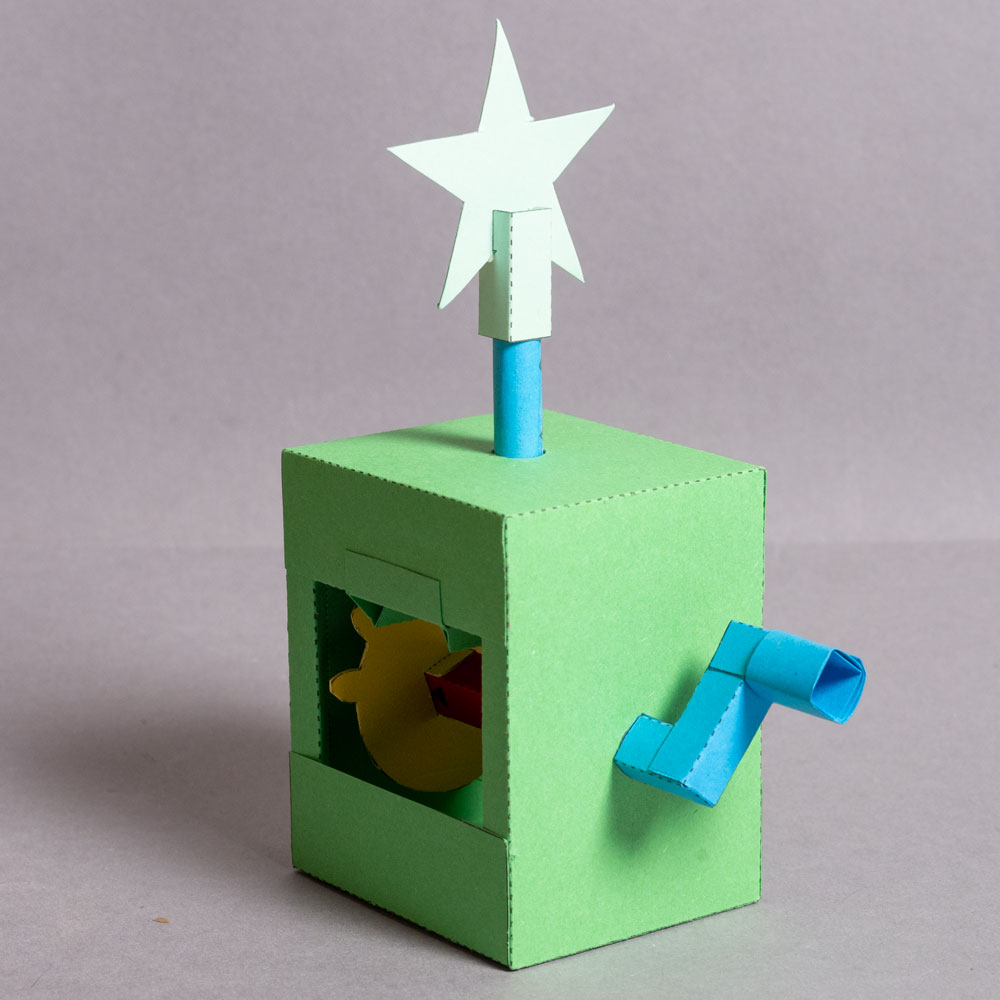
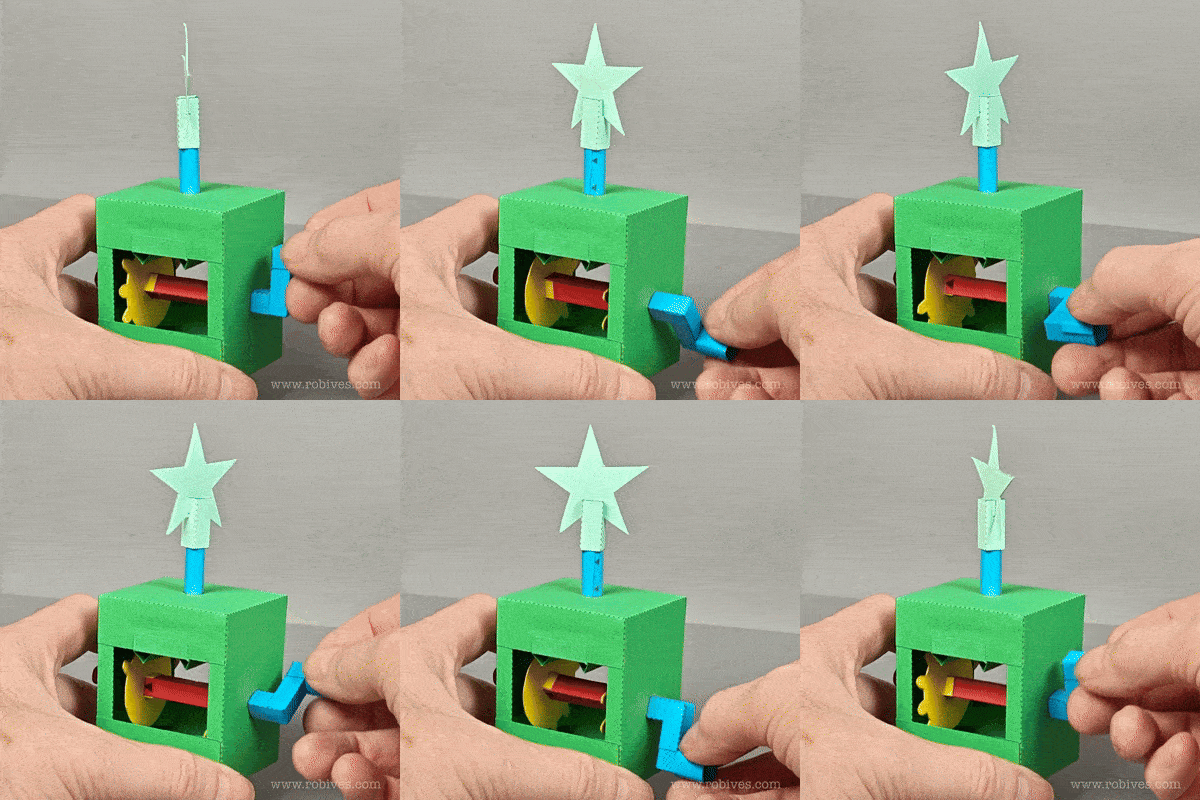
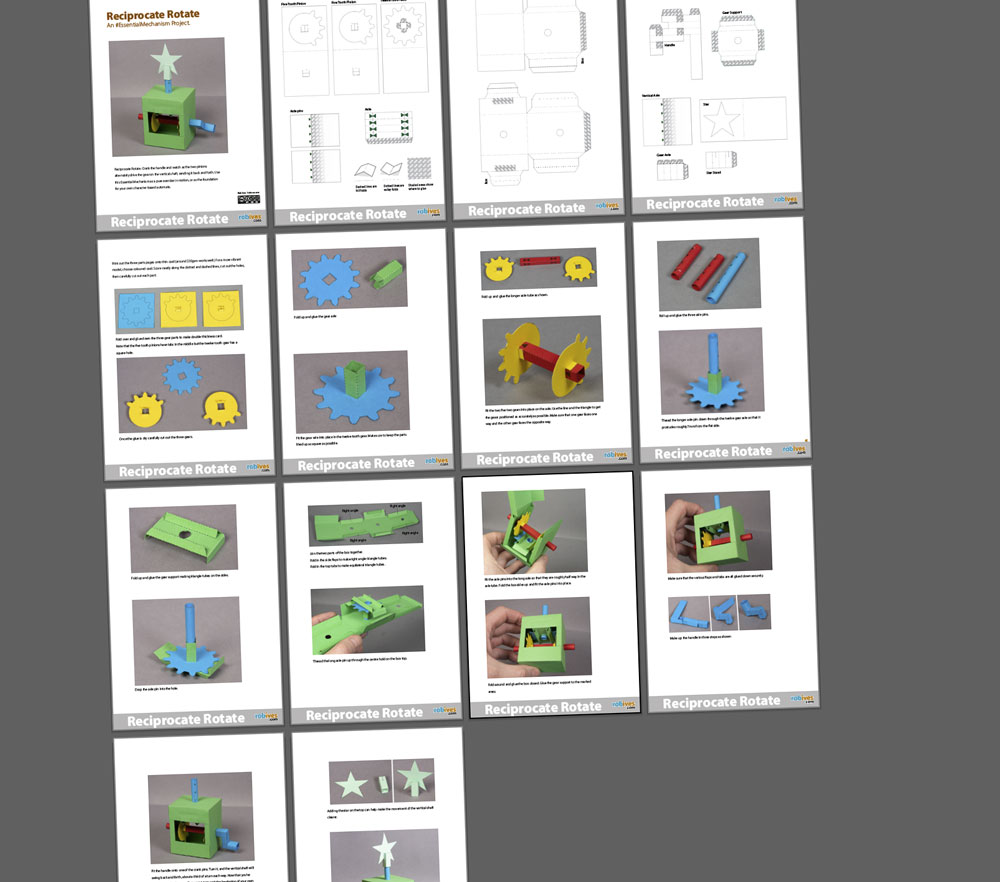
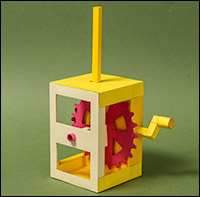
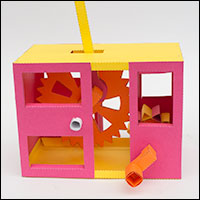
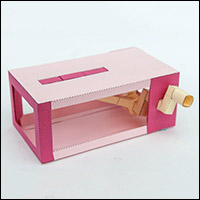
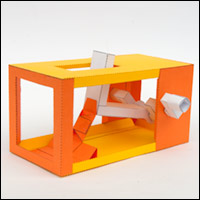
This mechanism is used to convert between rotary motion and reciprocating motion. In this mechanism the straight line motion stays at a constant speed throughout the full length of the throw.
It looks like intermitent motion based on the gear, but it isn't. What is the application?
Friday 19th Aug 2011 02:51
do you have a buildable copy of this
Monday 3rd Oct 2011 14:43
Seems to be constant motion along length of travel. Therefore the switch between the slide's movement in one direction and the other would have to be instantaneous? Is this right?
Monday 3rd Oct 2011 17:03
robives
Yes, the motion switch is instantaneous. Could be a problem with a real life mechanism, there would be a danger of the teeth snapping off.
Thursday 13th Oct 2011 13:33
i am so thankful ii found this
Friday 18th Nov 2011 05:48
can the speed of this model be reduced??????
Friday 18th Nov 2011 12:29
Great work rob, from the chaps of walbottle campus
Wednesday 25th Jan 2012 04:06
Anonymous
Where did this wonderful mechanism originate?
I'm not sure, does anyone know? - RI
Wednesday 15th Feb 2012 11:04
Hey guys im a robo nerd and im hoping to create a human like robot what sort of mechanisms could i use for the fingers??? i was thinking of using recipricating mechanisms
Sunday 11th Mar 2012 11:32
Blakymcblack
Try the quick return method found here:
http://robives.com/mechanisms/quickreturn
Sunday 11th Mar 2012 11:34
Blakymcblack
Or you could now adapt the New Flip Face mechanism Variant
Thursday 22nd Mar 2012 20:21
This motion was found in 'Climax' wind engines. The wind turned the pinion and the yoke moved vertically up and down, usually to pump water from wells for cattle in remote places.
Friday 18th May 2012 08:22
Thanks a lot 4 the animations Rob; they helped us a lot to fully understand the concepts in mechanisms. Keep up the good work!!!!! From the Form 2C Design & Technology class of 2012 - Selepa Junior Secondary School ; Francistown - Botswana.
You are welcome! I am glad they were helpful - RI
Monday 21st May 2012 09:30
this very good i love it
Tuesday 17th Sep 2013 05:19
This is EXACTLY what I was looking for! I needed constant left-right motion utilizing only a simple rotary gear, and here it is!
Sunday 3rd Nov 2013 22:16
i'm confused... why is the example there if it shows linear and rotary when the topic is reciprocating???
Reciprocating mean back and forth. You can have reciprocating linear motion as with the blue yoke on this animation - RI
Monday 4th Nov 2013 10:52
Smelter
Rob uses simple mechanisms to illustrate mechanical principles.
Most reciprocating or linear motions are generated from rotary sources as in Rob's illustration above.
The only true linear motion I've seen in use are electrical linier motors. You can read about them here :-
Thank you so much. This would be absolutely perfect to adapt to a bicycle powered washing machine, which idealy needs to reverse direction so that the water and clothes in the drum sloshes one way then the other but the cyclist just keeps cycling one way. I was looking at all sorts of complicated mechanisms! This is so great.
Tuesday 14th Oct 2014 19:25
me 2
wonderful and beautiful
Wednesday 15th Oct 2014 06:59
Hi i wouldnt say i know next to anything about mechanisms so this question may seem simple and laughable but i was curious as how one who predict the total linear distance traveled that the mechanism would produce,
is it based on the diametor of the gear driving it or some other factor? ( ie bigger gear more distance )
the distance moved is related to the size of the gear. If the gear were to tune a full turn the distance would be the diameter of the gear times pi. In this example though, the teeth are only around roughly one third of the gear so the distance is the diameter of the gear, times pi, divided by three. - RI
Thursday 16th Oct 2014 07:49
Smelter
Rob
I believe "time" is not a factor here :-(
"the distance is the diameter of the gear, time pi, divided by three."
It would be a bit clearer to write the formula :- Distance = (Diameter x Pi) / 3
Comments
Do you have a printable model for this?
robives
Not at the moment but it should be possible to adapt the rack and pinion here.
Rob
It looks like intermitent motion based on the gear, but it isn't. What is the application?
do you have a buildable copy of this
Seems to be constant motion along length of travel. Therefore the switch between the slide's movement in one direction and the other would have to be instantaneous? Is this right?
robives
Yes, the motion switch is instantaneous. Could be a problem with a real life mechanism, there would be a danger of the teeth snapping off.
i am so thankful ii found this
can the speed of this model be reduced??????
Great work rob, from the chaps of walbottle campus
Anonymous
Where did this wonderful mechanism originate?
I'm not sure, does anyone know? - RI
Hey guys im a robo nerd and im hoping to create a human like robot what sort of mechanisms could i use for the fingers??? i was thinking of using recipricating mechanisms
Blakymcblack
Try the quick return method found here:
http://robives.com/mechanisms/quickreturn
Blakymcblack
Or you could now adapt the New Flip Face mechanism Variant
This motion was found in 'Climax' wind engines. The wind turned the pinion and the yoke moved vertically up and down, usually to pump water from wells for cattle in remote places.
Thanks a lot 4 the animations Rob; they helped us a lot to fully understand the concepts in mechanisms. Keep up the good work!!!!! From the Form 2C Design & Technology class of 2012 - Selepa Junior Secondary School ; Francistown - Botswana.
You are welcome! I am glad they were helpful - RI
this very good i love it
This is EXACTLY what I was looking for! I needed constant left-right motion utilizing only a simple rotary gear, and here it is!
i'm confused... why is the example there if it shows linear and rotary when the topic is reciprocating???
Reciprocating mean back and forth. You can have reciprocating linear motion as with the blue yoke on this animation - RI
Smelter
Thank you so much. This would be absolutely perfect to adapt to a bicycle powered washing machine, which idealy needs to reverse direction so that the water and clothes in the drum sloshes one way then the other but the cyclist just keeps cycling one way. I was looking at all sorts of complicated mechanisms! This is so great.
me 2
wonderful and beautiful
Hi i wouldnt say i know next to anything about mechanisms so this question may seem simple and laughable but i was curious as how one who predict the total linear distance traveled that the mechanism would produce,
is it based on the diametor of the gear driving it or some other factor? ( ie bigger gear more distance )
the distance moved is related to the size of the gear. If the gear were to tune a full turn the distance would be the diameter of the gear times pi. In this example though, the teeth are only around roughly one third of the gear so the distance is the diameter of the gear, times pi, divided by three. - RI
Smelter