Bell Crank

extract
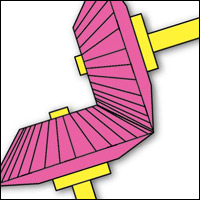
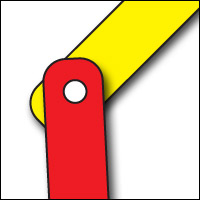
Using Flash Using Flash  The bell crank is used to convert the direction of reciprocating movement. By varying the angle of the crank piece it can be used to change the angle of movement from...

Bridge Structure

extract
We went walking near Keswick this morning. On the return leg of the journey we came across this rather attractive railway bridge, now converted to a foot bridge. It was the structure that caught my...

Cam follower

extract
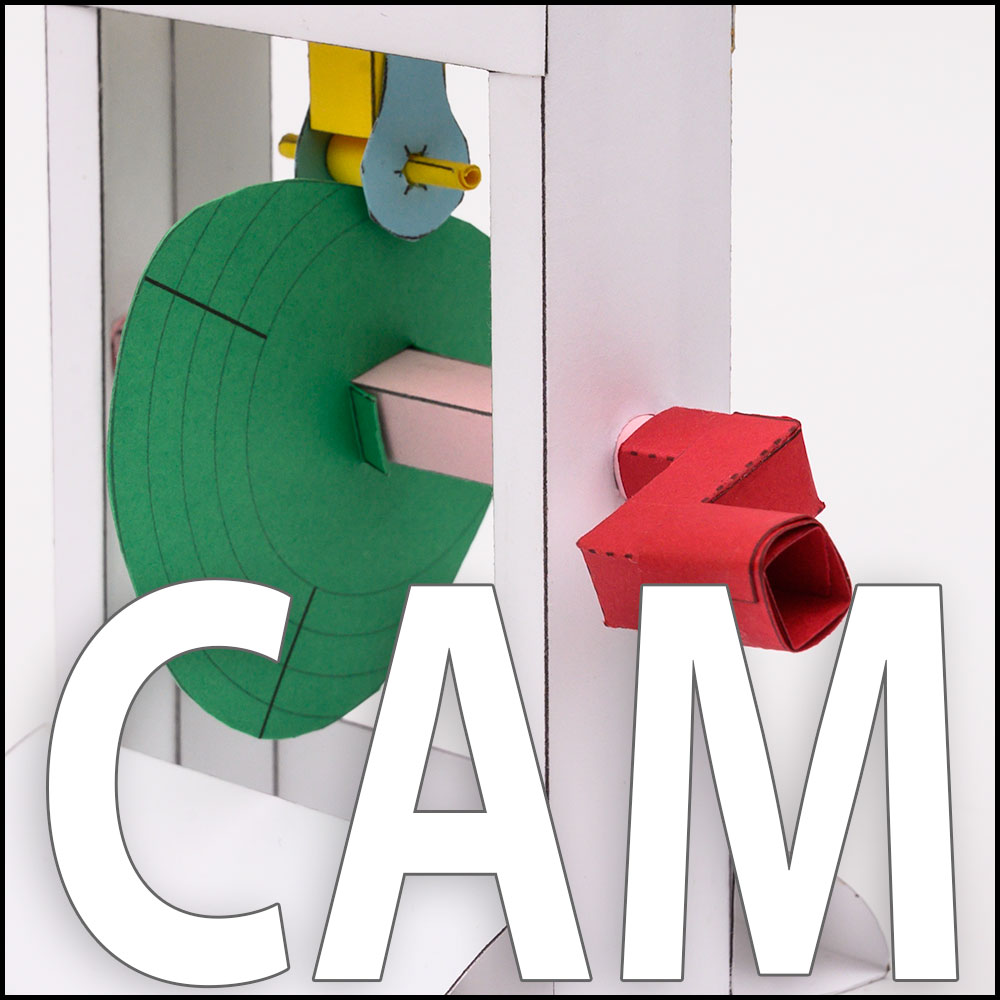
The heart of many automata, both traditional and the paper variety, is the cam. The cam is perhaps the most flexible way of driving a mechanism. By changing the shape of the cam profile all sorts of...

Cams

extract
Cams are a simple mechanism that can be used to create quite complex movements. As the cam turns a cam follower, which is touching the surface of the cam, moves up and down in a movement described by...

Chain and Sprocket

extract
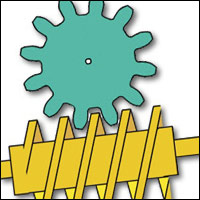
Like gears, chain and sprocket drives are used to transmit rotary motion from one place to another and just like gears the ratio of speed between two sprockest is the same a the ratio of the number...

Gear Train

extract
In a clock the minute hand runs at one sixtieth the speed of the second hand. The clockmaker could connect the two with a 60:1 gear but even with a small 10 tooth drive wheel she would still need a...

Gears

extract
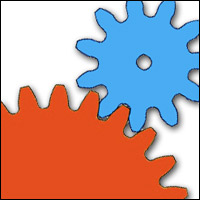
Gears are used to change speed in rotational movement and to move rotation from one place to another. In the example below the brown gear has twenty teeth and the light brown gear has eight teeth and...

Geneva Drive

extract
The Geneva drive is named after the city of its invention where it was used in the construction of clocks. Originally the Geneva mechanism was used as a way of preventing springs from being wound too...

Hypocycloid

extract
The hypocycloid mechanism is used to make a compact, simple gear box that reduces rotational speed. In the case of this animation the reduction is 7:1. Follow one of the lobes of the six pointed...

Involute Gears

extract
As promised in yesterday's blog, a post about the construction of involute gears. The profile of the side of an involute gear is defined mathematically but you can also construct it with a few...

Levers

extract
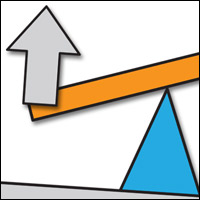
Levers come in three types, or 'orders' The different orders refer to the way the three main parts of the lever are laid out. That is, the fulcum or pivot point, the load, the thing to be moved and...

Peaucellier Linkage

extract
Invented in 1864 the Peaucellier linkage (poo-selli-yeah) linkage was created as a way of making straight line from circular motion. It was used in steam engines to control valves without the need to...

Piston

extract
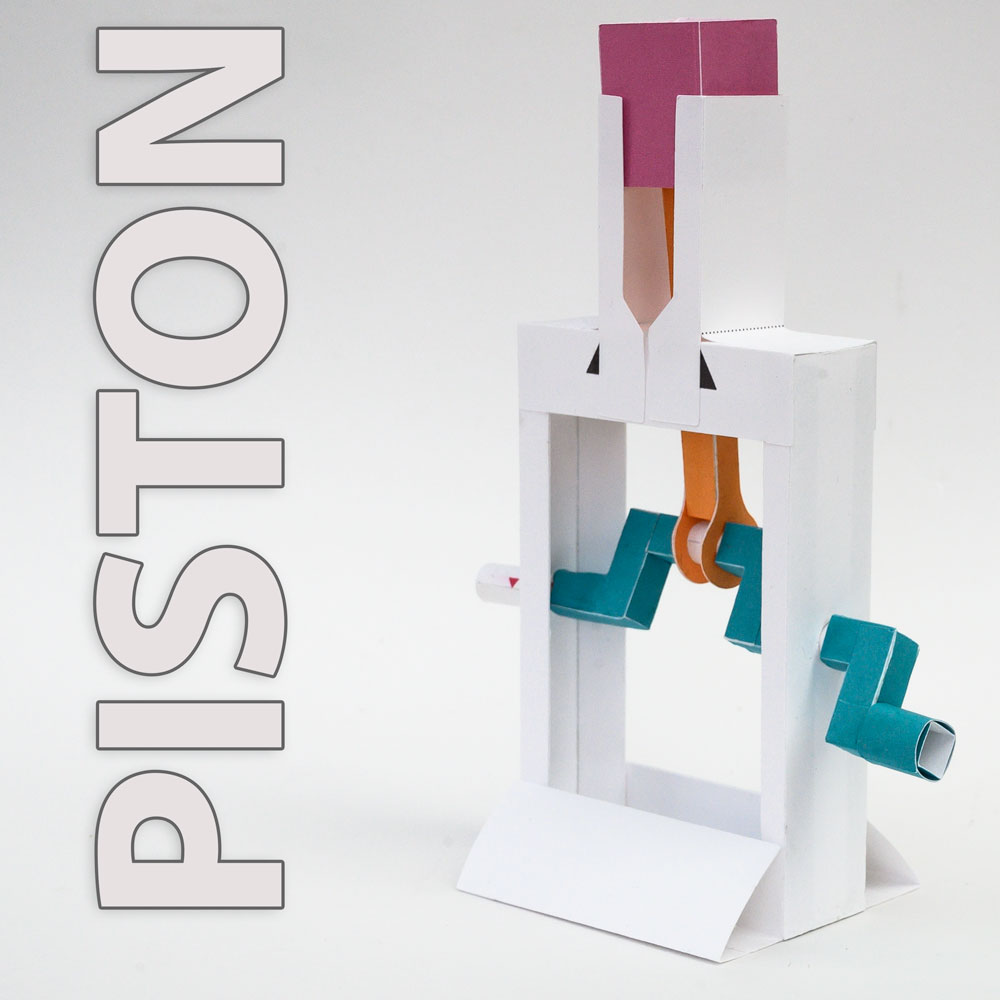
The piston mechanism is used to convert between rotary motion and reciprocating motion, it works either way. Driving the wheel will move the piston back and forth, in this form the piston can be used...

Rack and Pinion

extract
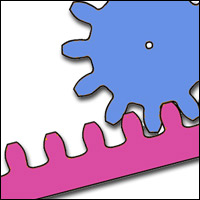
The rack and pinion is used to convert between rotary and linear motion. The rack is the flat, toothed part, the pinion is the gear. Rack and pinion can convert from rotary to linear of from linear...

Rack and Pinion - Modified

extract
More Flip Face Fun: Animation test for mechanism #4. I've jumped past the original Rack and Pinion idea straight to this. The lower gear is a six tooth section from a forty tooth gear. The pivot...

Ratchet - Five Tooth

extract
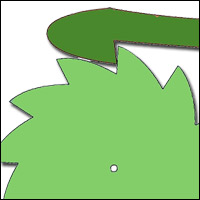
A five toothed ratchet mechanism soon to be implemented in card. As the housing moves back and forth the pawl drops into the tooth and advances the gear one fifth of a turn before returning to engage...

Ratchet - Two Teeth

extract
This animation demonstrates the movement of the two-toothed ratchet mechanism. The housing rocks back and forth, at the bottom of its throw the pawl clicks down and catches on the next ratchet tooth...

Ratchet Mechanism

extract
I came across this alternative way of using a ratchet as a drive mechanism. The lever on the right is the input. Pull it back and forth to intermittently drive the wheel forward. As the lever...

Rotary Motion

extract
Rotary motion is motion in a circle. As a mechanism rotates it turns about a fixed point. The speed of rotation is measured in revolutions per minute or rpm. This the number of complete rotations...

Scotch Yoke

extract
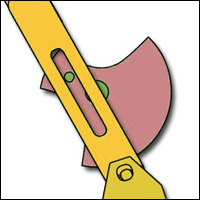
The scotch yoke is a very simple mechanism for converting rotary motion into reciprocating (back and forth) motion using an absolute minimum of parts. Using Flash The dark blue pin, sits in the slot...

Scotch Yoke with Dwell

extract
By adding a cut out to the yoke of the scotch yoke mechanism that is the same shape as the locus of the pin it is possible to make the yoke stay still for a portion of the wheel's travel. This...

Watt Linkage

extract
The original steam engines used pistons that were powered in only one direction. As the piston pulled down, it pulled on a chain link over a curved rocker similar to the nodding donkeys seen in oil...